Shell Size Guide

Shell diameter is the single most important variable in display planning. It determines burst altitude, visual coverage, safety clearances, and overall production scale. This reference provides the technical context needed for informed event planning.

What Shell Size Refers To

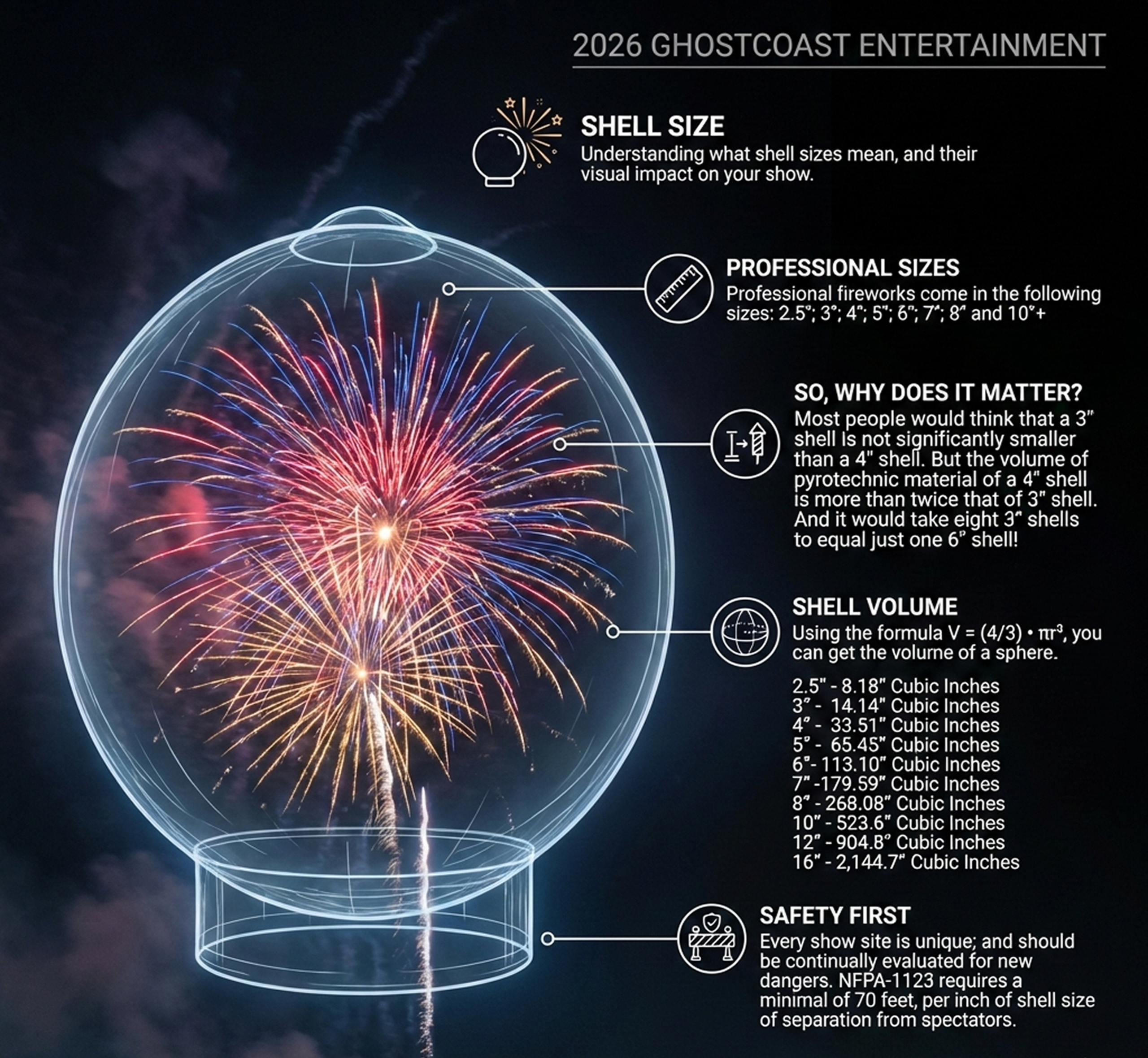
Shell size is measured by the outer diameter of the spherical or cylindrical projectile, expressed in inches. A 6-inch shell, for example, has a casing diameter of approximately six inches before launch. This measurement directly correlates with the volume of pyrotechnic composition inside the shell, which in turn determines burst altitude, diameter, and the intensity of the visual effect.
Larger shells travel higher, produce wider bursts, and require greater separation from spectators. The relationship between size and effect is not linear — a shell twice the diameter contains roughly eight times the volume of material, resulting in significantly greater visual impact and correspondingly larger safety requirements.

Shell Size Reference

Approximate specifications by shell diameter. Actual performance varies based on manufacturer, composition, and atmospheric conditions.
DiameterBurst Height (ft)Burst Width (ft)Typical ApplicationsMin Viewing Distance (ft)
2.5"150-20075-100Small Outdoor Venues, Limited effects.100-200
3"200-280100-150Common Size, used in most displays.200-300
4"250-350150-200Common Size, used in most displays.280-400
5"300-450200-300Large public events, festival-scale displays350-500
6"400-560300-400Major venue displays, high-visibility civic events420-600
8"500-700400-550Major venue displays, high-visibility civic events560-800
10"650-900550-700Signature aerial displays, waterfront productions700-1000
12"800-1100700-900Premier large-format displays requiring maximum visual coverage840-1200

Visual Scale Reference

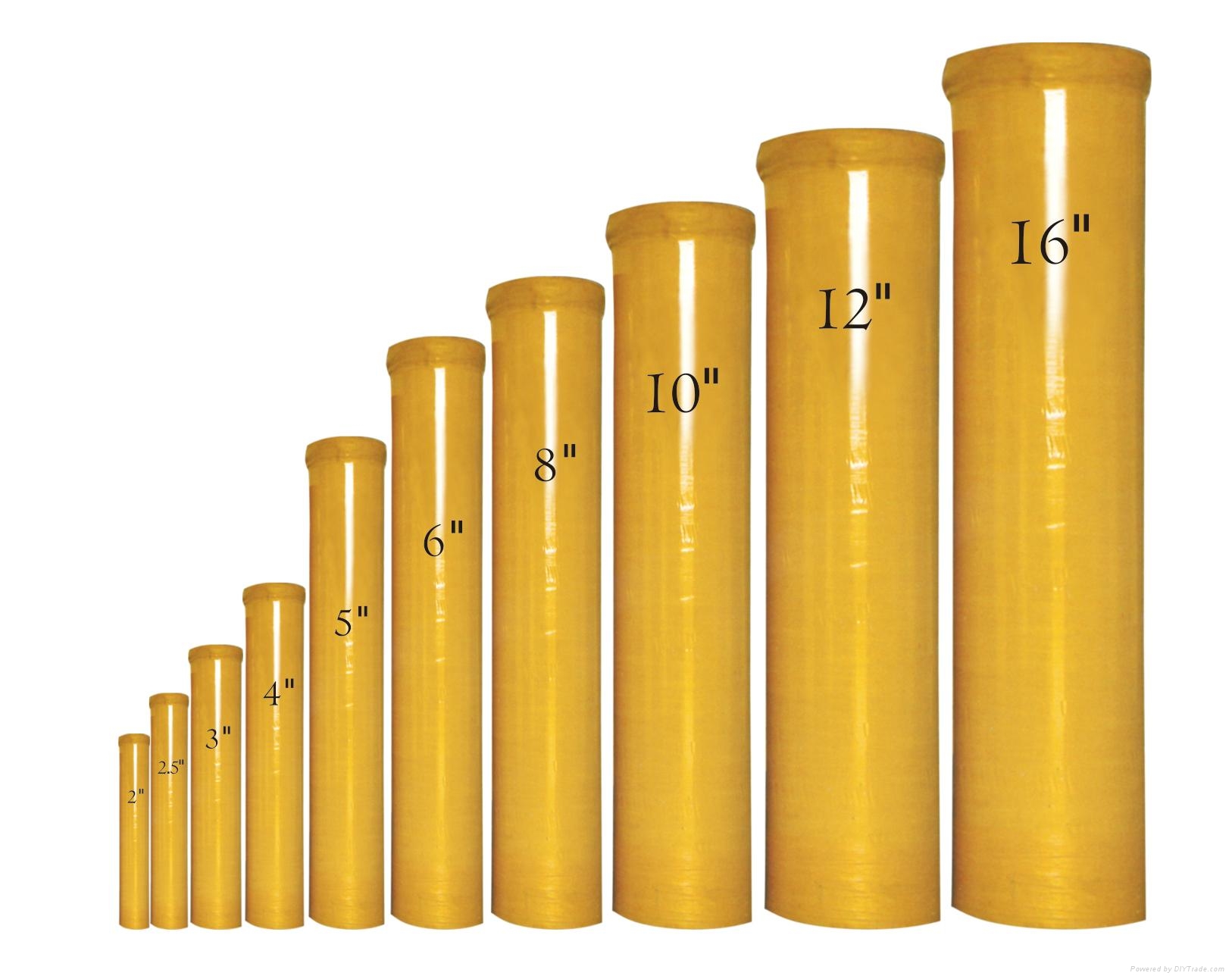
The diagram illustrates the relative volume differences between common shell sizes. Note how material volume — and therefore visual output — increases exponentially with diameter.